
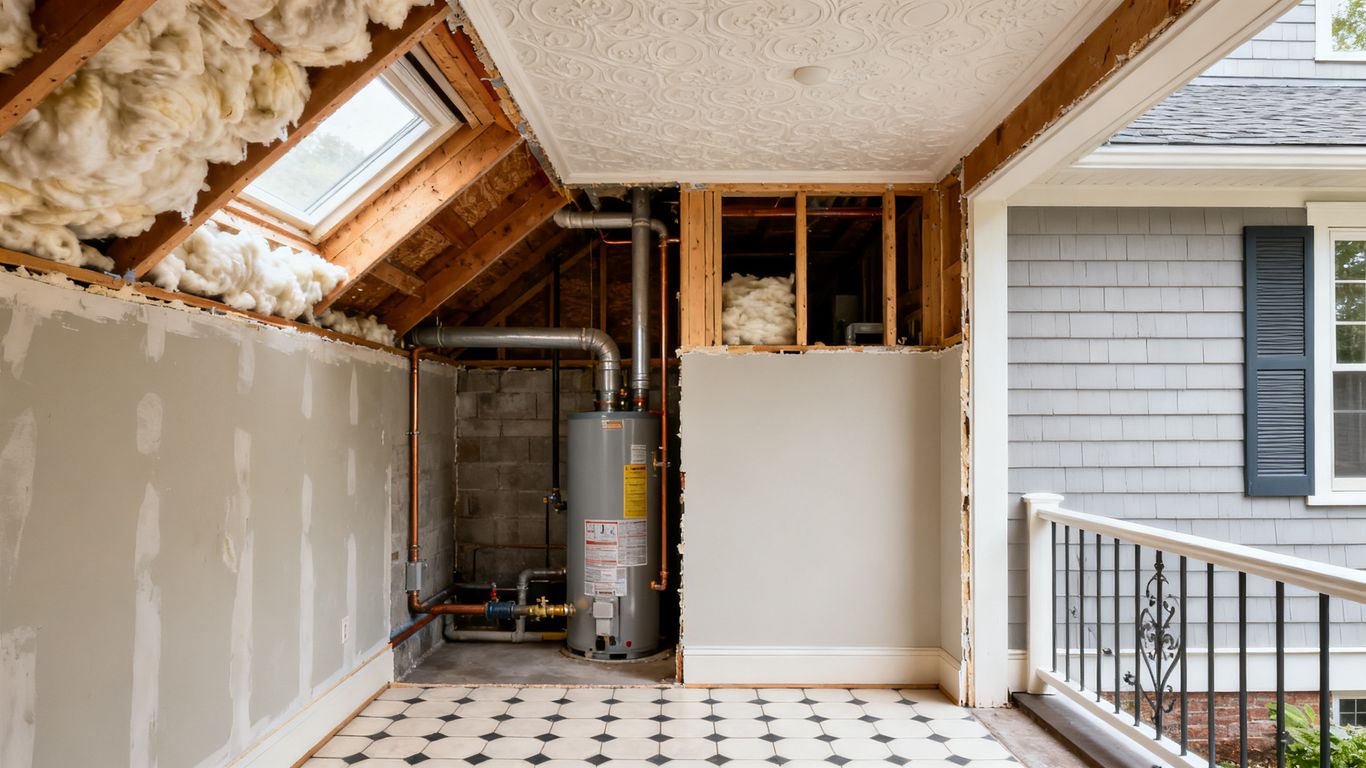
Asbestos was valued for its resistance to heat, fire, and wear, so it found its way into many ordinary building products. In older houses, it may still sit quietly inside insulation, flooring, ceilings, siding, or utility-system materials. These asbestos hotspots in older homes are not always obvious, and the greatest concern often begins when a material is disturbed.
When asbestos was commonly used in residential construction
Asbestos was widely incorporated into residential construction materials through much of the twentieth century, particularly before its health risks were fully understood. It could be mixed into cement, woven into insulation, added to coatings, or used as reinforcement in flooring and roofing products. A house built or remodeled during that period deserves a more careful material history before major work begins.
Why asbestos-containing materials can remain hidden for decades
Many asbestos-containing materials were installed behind walls, beneath floors, above ceilings, or around pipes and heating equipment. Later owners may cover them with newer finishes without removing the original layer. As a result, a home can look thoroughly modern while older materials remain underneath, especially in rooms that have not been remodeled from the framing outward.
A useful home asbestos guide can help homeowners understand why age, location, and renovation history matter together rather than relying on a single visual clue.
The difference between intact materials and damaged materials
An intact, well-maintained material is less likely to release fibers than one that is crumbling, scraped, broken, or repeatedly rubbed. That does not make an intact material safe to handle casually, however. Its condition, accessibility, and likelihood of being disturbed all belong in a professional risk assessment.
How renovation and maintenance can disturb asbestos fibers
Demolition, drilling, sanding, scraping, cutting, and even pulling up old flooring can disturb materials that appeared stable. Routine tasks such as installing recessed lighting, replacing a heating line, or fastening shelving may also reach hidden layers. Avoiding unnecessary disturbance is therefore the soundest first response when an older material is uncertain.
Attic asbestos hotspots
Attics often contain a mixture of original insulation, later additions, roof components, and mechanical equipment. Limited access and poor lighting make it easy for homeowners to overlook materials that would be noticed during a formal inspection. Before an attic becomes a storage room or ventilation project, its contents should be treated as potentially significant until assessed.
Vermiculite insulation and loose-fill attic insulation
Loose-fill insulation can have a granular, pebble-like, or fluffy appearance, depending on the product and installation period. Vermiculite insulation is a particular concern because some supplies were contaminated with asbestos, and visual appearance cannot establish whether a specific installation contains it. Homeowners should avoid walking through, raking, bagging, or moving suspect insulation.
A second attic asbestos reference offers useful background on vermiculite and other common places asbestos may occur before renovation planning begins.
Asbestos-backed roofing materials and flashing
Older roofing systems may include felt, flashing, cement products, or backing materials that contain asbestos. These components can be exposed when a roof is repaired, when a skylight is added, or when water damage leads to interior work. Roof access should be left to professionals who can identify the materials and follow appropriate work practices.
Insulation around attic pipes, ducts, and tanks
Pipes, ducts, tanks, and heating equipment in an attic may have insulation wraps, papers, tapes, or coatings applied during installation. Damage from leaks, animals, condensation, or repeated maintenance can make these materials fragile. Even a small repair can create a wider problem if insulation is pulled aside without first determining what it contains.
Asbestos-containing ceiling and wall materials
The attic side of a ceiling may reveal boards, insulation papers, plaster, or sprayed materials that are not visible from the living space. Wall and roof assemblies can also include older fire-resistant panels or cement-based products. A narrow access opening should not be made simply to obtain a sample; sampling is best planned and performed by a qualified professional.
What to consider before adding storage or improving ventilation
New flooring, platforms, lighting, fans, and ductwork can all disturb attic materials. Storage plans should account for where a person will step, where fasteners will go, and whether insulation will be displaced. A professional assessment before work is usually less disruptive than discovering a suspected material halfway through installation.
Living areas where asbestos may be present
Living rooms, kitchens, halls, and bedrooms may contain asbestos in finishes that seem purely decorative or familiar. The material may be in the surface itself, in an adhesive, or in a backing layer beneath a newer covering. Because these rooms receive frequent use, small repair projects can create repeated opportunities for disturbance.
Textured ceilings, popcorn ceilings, and decorative finishes
Textured or stippled ceilings were used to create a decorative surface and sometimes to improve acoustics or conceal uneven construction. Older ceiling coatings may contain asbestos, but texture alone does not prove its presence. Scraping, painting preparation, installing ceiling fixtures, or repairing water stains should wait until the coating has been evaluated.
Vinyl floor tiles, sheet flooring, and flooring adhesives
Older vinyl tiles, sheet flooring, and the adhesives beneath them are common areas of concern. The flooring may be covered by carpet, laminate, or a newer resilient floor, leaving the original material hidden. Pulling up a corner or grinding adhesive residue can release dust, so removal should not begin merely because the floor looks dated.
Wallboard, joint compound, and plaster repairs
Asbestos may occur in some older wallboard systems, joint compounds, textured coatings, and plaster repairs. A homeowner cannot determine the contents of a wall by its color or hardness. Cutting an opening for wiring, removing built-ins, or sanding a patched area should be coordinated with an assessment when the building history raises concern.
Fireplace surrounds, hearth materials, and heat-resistant panels
Fireplaces and wood-burning stoves often required materials that could tolerate high temperatures. Heat-resistant panels, cement sheets, insulation, mortar, and decorative surrounds may therefore deserve attention in an older home. Cleaning soot is not the same as removing a panel, and any renovation around the firebox should be planned with the material condition in mind.
Window caulking, glazing compounds, and older sealants
Older windows can have glazing compounds, caulks, and sealants that are difficult to distinguish from ordinary aged putty. Replacement work may involve scraping, cutting, or grinding around the frame. Window contractors should know the age and history of the house before disturbing old compounds, particularly during full-frame replacement.
Basement and utility-room hotspots
Basements concentrate heat, plumbing, electrical equipment, and repair work in a small area. They also tend to preserve original systems long after the rest of the house has been updated. The combination makes utility rooms especially important when a homeowner is replacing a boiler, moving ductwork, or correcting a leak.
Boiler and furnace insulation
Boilers and furnaces may have insulation on jackets, doors, combustion areas, or nearby surfaces. The insulation can deteriorate from heat, moisture, vibration, or repeated servicing. Scraping it away or opening a panel without guidance can spread debris around a confined room.
Pipe insulation, fittings, and insulation paper
Older pipe insulation may appear as a fabric wrap, molded covering, paper layer, or plaster-like coating. Fittings and elbows can contain different materials from the straight sections, which means a small visible difference does not necessarily indicate a safe area. Plumbing repairs should include a plan for any insulation that must be moved or removed.
Duct insulation and heating-system components
Ducts can have insulation on their exterior, inside their lining, or around joints and transitions. Heating-system components may also include gaskets, tapes, and boards selected for heat resistance. A contractor who sees only the metal duct may miss an asbestos-containing layer attached to it.
Cement board around furnaces, boilers, and utility areas
Cement board and similar panels were used in areas where fire resistance and durability mattered. They may surround furnaces, boilers, flues, or workshop surfaces and can look much like ordinary fiber-cement board. Drilling through these panels for brackets or replacing them during a utility upgrade should follow a material assessment.
Basement floor tiles, adhesives, and patching compounds
Basement floors often retain old tiles, black or brown adhesives, and patching compounds beneath newer surfaces. Moisture damage can loosen tiles without making the adhesive safe to scrape. A flooring project should account for every layer, including material that is concealed under a newer finish.
Other overlooked asbestos hotspots throughout the house
Asbestos concerns are not limited to the rooms inside the main living envelope. Exterior products, garages, electrical components, and detached structures may have their own construction histories. A complete review considers the entire property, including areas that are used only for occasional maintenance.
Exterior siding, shingles, and soffit materials
Cement siding, shingles, soffits, and trim products may contain asbestos in some older homes. They can remain stable for years but become a concern during pressure washing, cutting, replacement, or storm cleanup. Broken exterior pieces should not be swept, snapped, or placed in ordinary household waste without local guidance.
Roofing felt, underlayment, and flashing
Roof repairs can expose more than the visible shingles. Felt, underlayment, flashing, and sealants may be older layers with separate material risks. A roofing estimate should address whether the crew will remove, penetrate, or leave each existing layer in place.
Electrical panels, wiring insulation, and heat-resistant components
Electrical work in an older house may encounter heat-resistant wire insulation, panel components, arc chutes, or backing materials that require careful handling. The presence of an old panel is not proof that it contains asbestos, but age and unusual insulation should prompt caution. Electricians should be told about suspected materials before opening walls or removing equipment.
Garage drywall, insulation, and automotive repair areas
Garages may preserve original drywall, joint compound, insulation, ceiling finishes, and flooring long after interior rooms have changed. Older automotive repair areas can also contain heat-resistant products, brake-related dust, or stored building materials. Renovation and cleanup should distinguish household debris from potentially contaminated material.
Asbestos-containing materials in sheds and detached structures
Sheds, workshops, and outbuildings were often built with leftover or inexpensive cement products, roofing sheets, insulation, and flooring. Their age may be harder to establish because permits and renovation records are incomplete. Before demolition or storm-damage cleanup, these structures should be inspected with the same care as the main house.
How to identify potential asbestos without taking unnecessary risks
Identification begins with history and observation, not with a screwdriver or utility knife. A material’s age, location, condition, and relationship to later renovations can help determine whether professional testing is worthwhile. The purpose of an initial review is to decide what must remain untouched while better information is obtained.
Use the home’s age, renovation history, and material condition as clues
Construction records, previous inspection reports, product labels, and renovation invoices can provide useful clues. Missing records do not establish that a material is asbestos-free, and a recent renovation may have covered rather than removed an older layer. Crumbling, water-damaged, or frequently disturbed materials deserve quicker attention than inaccessible materials in good condition.
Why visual inspection alone cannot confirm asbestos
Asbestos fibers are too small to confirm by sight, and many asbestos-containing products resemble non-asbestos products. Texture, color, age, and pattern may suggest a possibility but cannot provide a reliable answer. Confirmation generally requires an appropriately collected sample and laboratory analysis performed under applicable rules.
When to arrange professional sampling and laboratory analysis
Sampling is most useful when a planned project may disturb a material or when a damaged area needs a management decision. A qualified asbestos inspector can select representative locations, account for layers, and reduce unnecessary disturbance. Laboratory results should be interpreted alongside the material’s condition and the proposed scope of work.
What homeowners should avoid cutting, sanding, drilling, or removing
Until a suspect material has been assessed, homeowners should not scrape textured ceilings, sand flooring adhesive, drill old panels, pull pipe insulation, or break cement products. Dry sweeping and household vacuuming can also spread dust if debris has already been generated. Stopping work and restricting access is safer than trying to tidy the area first.
How to document suspected materials before planning work
Photographs taken from a safe distance, room names, approximate locations, visible damage, and the date of observation can help an inspector understand the situation. Records of leaks, prior repairs, and intended renovations are equally useful. Documentation should support planning, not encourage repeated handling or close-up examination of fragile material.
Managing asbestos during repairs and remodeling
A remodeling plan should identify suspect materials before the schedule, demolition sequence, and contractor assignments are finalized. The appropriate response depends on the material, its condition, the work area, and local requirements. Early assessment can prevent delays, unexpected costs, and unnecessary exposure during construction.
When to use an accredited asbestos inspector or abatement contractor
An accredited or otherwise properly qualified professional should be considered before work that may disturb suspect materials. An inspector can assess and sample, while an abatement contractor may be needed for controlled repair or removal. Credentials, insurance, training, and experience with the relevant type of project should be verified rather than assumed.
How containment and safe removal typically work
Professional work may involve isolating the area, controlling access, using appropriate protective equipment, managing air movement, and keeping debris contained. Removal methods are selected to minimize breakage and dust, followed by careful cleanup and waste handling. The exact procedures depend on the material and jurisdiction, so homeowners should not treat a generic online method as a project plan.
Differences between repair, encapsulation, enclosure, and removal
Repair may stabilize a damaged material, while encapsulation covers or seals it so fibers are less likely to escape. Enclosure places a durable barrier between the material and occupied space; removal takes the material out under controlled conditions. A professional can explain which approach fits the material and future use of the room rather than assuming removal is always necessary.
Permits, notifications, and disposal requirements
Asbestos work may involve permits, advance notifications, worker-protection rules, air-monitoring requirements, and designated disposal procedures. Requirements vary by location and by the amount and type of material involved. Before work begins, the homeowner and contractor should identify who is responsible for each filing, inspection, and waste record.
Questions to ask contractors before work begins
A written scope should state what materials will be addressed, how the work area will be controlled, and how debris will be packaged and transported. Homeowners can also ask who will perform the work, what training applies, and how clearance or final cleanup will be documented. Clear answers are more useful than a low estimate that leaves safety responsibilities undefined.
Protecting household members and planning next steps
A suspected material does not require panic, but it does require a measured response. The household should reduce access, avoid creating dust, and seek qualified advice before resuming work. Good records and a calm plan make it easier to protect occupants while preserving the home’s repair options.
What to do if suspected asbestos is damaged or disturbed
Work should stop, and people should leave the immediate area without tracking dust through the home. Doors can be closed and access limited while a qualified professional is contacted. Homeowners should avoid sweeping, vacuuming with ordinary equipment, or collecting fragments by hand because cleanup methods must match the material and extent of disturbance.
How to limit exposure during emergencies and cleanup
After a leak, storm, fire, or accidental breakage, the priority is to keep people and pets away from the affected space. HVAC systems that could move dust through the house may need professional consideration before operation, but occupants should not handle equipment impulsively. Emergency responders, building officials, or asbestos professionals can help determine the next safe step.
Special considerations for children, pets, and people with respiratory conditions
Children and pets may crawl, play, or track debris into other rooms, so they should be kept away from suspect areas. People with respiratory conditions may need an especially cautious household plan, although an individual healthcare provider should address personal medical concerns. No family member should be assigned cleanup simply because the damaged area appears small.
How to maintain a record of suspected and confirmed materials
A household asbestos file can include inspection reports, laboratory results, photographs, floor plans, contractor documents, and dates of repair. Marking locations on a plan can prevent future workers from unknowingly disturbing the same material. The record should be updated whenever a material is repaired, enclosed, removed, or confirmed through testing.
When to schedule follow-up inspections after renovation work
A follow-up inspection may be appropriate after abatement, enclosure, major remodeling, or an accidental disturbance. The timing and scope depend on the work performed and local requirements, and a professional can determine whether visual review, documentation, or air testing is applicable. Future renovations should begin by consulting the record rather than repeating uncertainty.
Careful identification is the foundation of safe decision-making in an older home. By treating questionable materials respectfully, arranging qualified assessment, and documenting the results, homeowners can address asbestos hotspots without turning ordinary maintenance into an avoidable exposure event.

Comments are closed.