
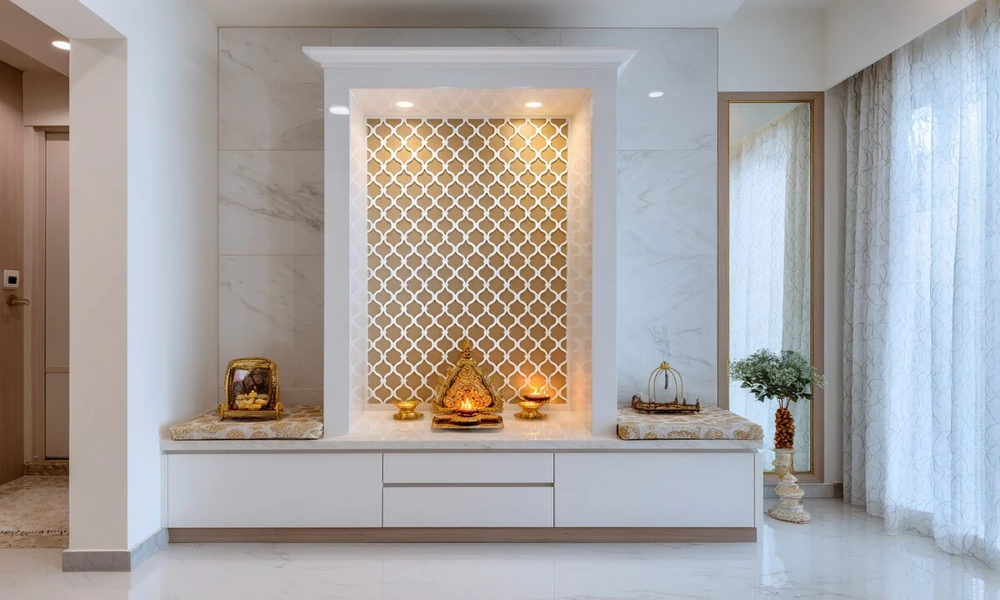
A pooja room is seen as a mere area for prayers by many. However, in reality, it is a blend of serenity, tradition, and personal belief. In the age of modern interior design, the possibilities are endless in developing a unique pooja room; however, it needs to maintain its sanctity. A mandir having jali coupled with backlit translucent white acrylic gives the pooja room a facial touch suitable for modern apartments and big houses.
The classic jali design combined with the use of lighting gives the mandir a beautiful design. Very soft and low lighting is used to illuminate the patterns behind it, just aiding the designs without making them too clear.
1. The Appeal of Backlit Acrylic Jali Designs
The jali patterns have been known for ages, due to their intricacy and the look they provide to the surface structure. In contemporary pooja rooms, the jali designs can range from floral patterns to any symmetric shape resembling a lotus or any form of decoration.
The arrival of backlit acrylic jali design allows you to get the most out of jali patterns. Imagine special lighting placed behind the surface of the patterns, giving the beauty of the cut-out patterns due to the diffusion of light by white acrylic material.
2. Using Translucent White Acrylic Behind the Mandir
The white appearance enhances the beauty of gilded elements, brass statues, marble pedestals, and wooden temple divisions. Hence, the integration of multiple elements does not result in a cluttered look of the decoration.
The eventual result of a translucent acrylic mandir panel depends on the transparency of the material, its thickness, and surface finish white acrylic sheet to understand which type diffuses light most effectively for backlit pooja room panels and how thickness choices affect the softness and evenness of the glow. , and on the way the illumination is arranged. An appropriate sheet contributes to soft lighting and a background that emphasizes the deity while ensuring a modern look of the decoration.
3. Creating a Serene Acrylic Pooja Room Wall
An acrylic pooja room wall becomes the focal point of the home if its making is done taking into account the temple design. The positioning of the jali screen in the middle creates balance, along with the hidden lighting that separates this space from the overall interior look.
In small houses, vertical sheets can attract the onlookers’ eyes to the temple without taking up any space on the floor. There can also be larger pooja rooms where wider sheets can be installed, framed up, and decorated in the same style. The illuminated wall works wonders along with understated backgrounds, neutral shades, and simple furniture.
4. Choosing Jali Patterns and Lighting
The pattern of the wall and the lighting need to be matched in order to create the impression needed. While the floral and lotus patterns are classic, the geometrical ones suit the modern pooja room design. The dimensions of the cut-outs are also important: detailed patterns designate ornate lighting effects, while wider openings will give a much broader appearance.
A glowing jali cutting sheet can be paired with hidden LED lights to create a uniformly glowing feature backlit acrylic panels and feature walls with LED lighting to understand how acrylic thickness, LED strip placement and diffusion distance work together to create an even, glare-free glow behind jali screens and mandir backdrops. Diffused lighting is usually better than exposed LEDs since it helps to avoid too bright spots on the panel. A warm white light has a cozy effect, while neutral white light is good to impart a modern look to the acrylic materials. It is also possible to use dimmers when the changing light is required.
5. Installation, Safety and Maintenance
A successful installation does not depend solely on the visual aspect of the finished panel. All elements, including jali, polycarbonate sheet, frame, and lighting, have to work well together. Enough space behind the panel is required for wiring and lighting and it is also better to provide the access. It would be good if the installation of the LED devices and electrical connections were put in the hands of a skilled specialist, taking into consideration heat removal and fire safety issues.
Acrylic surfaces can normally be cleaned using a soft microfiber cloth and detergent that is recommended. Rough sponges and improper solvents can inflict scratches on the surfaces of the panel. The panels must be protected from high temperatures produced by a nearby lamp or another device. Before actual installation, it is better to check the design and the color with the lighting.
Conclusion
A mandir featuring a backlit jali and translucent white acrylic panels is a good way to combine classical patterns with modern design solutions. The illuminated surface imparts deeper meaning, while the white acrylic gives a light haze, pleasantly complementing the sacred nature of the pooja room.

Comments are closed.