
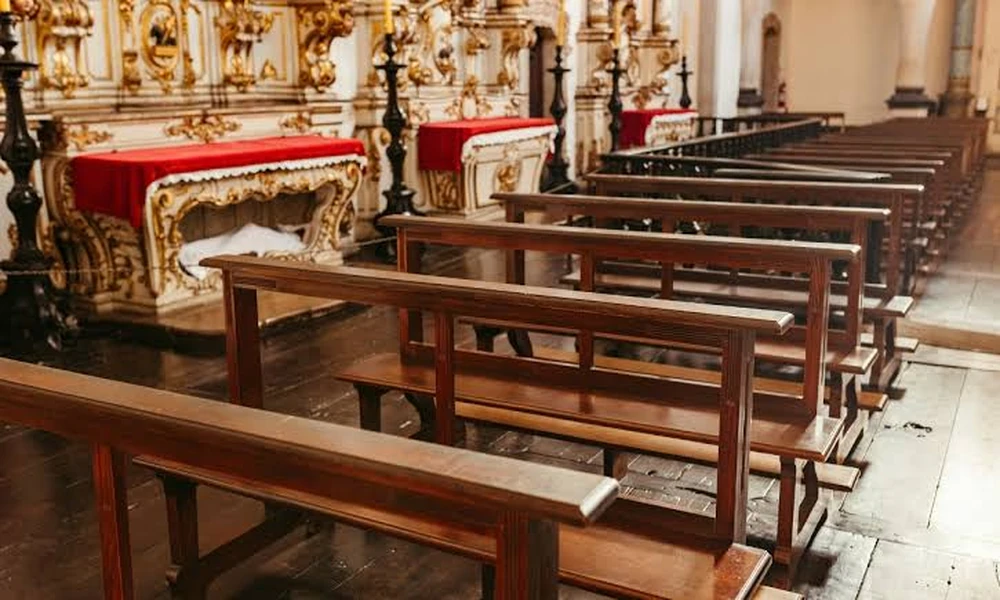
Walk into almost any historic church and the pews tell a story. The worn armrests, the hand-carved end caps, the patina of wood that has absorbed generations of prayer, grief, and celebration. These aren’t just pieces of church furniture. They are part of the living memory of a congregation, and that matters deeply when a building committee starts asking whether it’s time to restore them or start fresh.
If your congregation is weighing a pew restoration project, you are not alone. Many churches and synagogues across the country are sitting with original seating that is structurally sound but showing its age. The good news is that restoration is often more achievable than people expect. The challenge is knowing what you are actually getting into before the work begins.
This guide walks through what congregations, facilities managers, and building committees should understand before making any decisions.
Start with an Honest Structural Assessment
The first question is not about appearance. It is about structure.
Before anyone discusses stain colors or upholstery fabric, a qualified furniture professional should inspect the pews for structural integrity. That means looking at the joints, particularly where the seat frame meets the end panels. Many older pews were built using mortise-and-tenon construction, which holds up remarkably well over time. But years of use, humidity swings, and deferred maintenance can loosen joints, crack wood, and compromise the load-bearing parts of the frame.
Things to look for during an assessment:
- Loose or separating joints at the seat frame and end panel connections
- Cracked or split wood along the top rail or back panel
- Rot at the base of end panels, especially in older buildings with less climate control
- Previous repairs that were done with the wrong materials or techniques
- Pew feet or floor hardware that have shifted, leaving the units uneven
A pew that looks rough on the surface may be structurally excellent. Conversely, a pew that looks fine cosmetically might have joint failures that make it unsafe. Do not skip this step.
Understand What Restoration Actually Involves
Restoration is not a single service. It is a range of work that can include any combination of the following, depending on the condition of the pews and the goals of the project.
Structural repair addresses loose joints, cracked frames, damaged end panels, and anything that affects safety or longevity. This is the foundation of any restoration project. Everything else builds on it.
Surface refinishing removes the existing finish, prepares the wood, and applies a new stain or clear coat. This is where a lot of the visual transformation happens. Done well, refinishing can make pews that look decades old feel fresh and cohesive again. Done poorly, it can look worse than the original.
Upholstery replacement applies to pews that already have upholstered seats and backs, or congregations that want to add upholstery as part of the project. This involves removing old foam and fabric, replacing the foam core, and applying new fabric selected for durability and appearance. High-quality upholstered pews use commercial-grade materials that hold up to daily use over many years.
Hardware updates might include replacing worn kneeler hardware in Catholic or Episcopal churches, updating book rack brackets, or addressing cup holders and aisle end hardware.
A full restoration typically involves all of the above. A partial restoration might address only the most urgent issues and defer the rest to a later phase. Both approaches can make sense depending on your budget and timeline.
The Case for Creative Reuse
One approach that is worth understanding before you commit to a plan is creative reuse, which means producing something new out of the old. Rather than simply refinishing what exists or replacing it entirely, creative reuse looks at the original material and asks what can be preserved, repurposed, or reimagined.
This is particularly relevant for congregations with historic pews that have sentimental or architectural value. Some congregations have used salvaged end panels as decorative elements in fellowship halls or entryways. Others have incorporated original woodwork into new custom pieces. The goal is to honor what was built while making room for what the congregation needs today.
Creative reuse is not the right fit for every project, but it is a conversation worth having early. Once materials are removed and discarded, that option is gone.
Finish Matching: More Complicated Than It Sounds
If you are restoring pews in a sanctuary that also has existing woodwork, such as an altar area, reading table, choir area, or trim work, finish matching becomes a critical concern.
Wood changes color over time. A stain applied 50 years ago and a new stain applied today, even if they are nominally the same color, will look different on aged wood versus fresh wood. A skilled refinishing team will account for this by testing samples directly on the existing pieces and adjusting the finish formula to get as close a match as possible.
If the sanctuary woodwork also needs refinishing, doing all of it in the same project phase is almost always the better approach. Trying to match a new finish to old work, or old work to new, is an ongoing challenge that is easier to avoid than to solve after the fact.
Timing the Project Around Your Congregation’s Schedule
One of the most common concerns building committees raise is disruption. A restoration project requires removing pews or working in place, depending on the scope, and that affects when and how the congregation can use the space.
A few practical considerations:
Plan around your calendar, not just your budget. The worst time to discover a project is running long is two weeks before Christmas or Easter. Build margin into your timeline and have a contingency plan for services if needed.
Staged projects are possible. Some congregations restore one section of pews at a time, allowing the sanctuary to remain partially functional throughout. This extends the overall timeline but reduces disruption. Whether it is feasible depends on the project scope and the contractor’s process.
Climate matters. Finishing work is affected by humidity and temperature. Restoration scheduled during stable weather conditions, or in a climate-controlled facility, will produce better results than work done in extremes.
Communicate with your congregation early. Restoration is easier to support when people understand what is happening and why. Sharing the vision for the project and what the outcome will look like helps build patience for the process.
Restoration vs. Replacement: How to Think About It
This is the question that eventually comes up in every building committee conversation, and it deserves a straight answer.
Restoration makes sense when:
- The pews have structural integrity that can be preserved
- The existing style and scale fits the sanctuary well
- The congregation has a strong attachment to the original pieces
- The wood species and craftsmanship are worth preserving
- Budget allows for quality restoration work
Replacement makes sense when:
- The pews have significant structural failure that cannot be cost-effectively repaired
- The layout or size no longer serves the congregation’s needs
- The congregation is undergoing a broader renovation that changes the floor plan, sightlines, or platform arrangement
- Accessibility improvements require reconfiguring the seating layout in ways that existing pews cannot accommodate
In many cases, the decision is not strictly one or the other. Some congregations restore a portion of the original pews and add new custom pieces to match, particularly when expanding capacity or reconfiguring a section for wheelchair spaces and companion seating.
Working with the Right Partner
Pew restoration is specialized work. It sits at the intersection of furniture manufacturing, finish carpentry, and project coordination, and not every contractor who refinishes floors or cabinets is equipped to handle it well.
Look for a manufacturer or restoration partner with direct experience in worship seating. They will understand the structural requirements of pew joinery, the nuances of matching historic finishes, and the logistics of working in an active sanctuary. Ask to see examples of similar projects and ask specifically about their process for structural assessment, finish matching, and coordination with your project timeline.
The right partner will not rush you into a scope of work. They will help you understand your options, ask the right questions about your congregation’s needs, and give you a realistic picture of what the project involves before any work begins.
A Few Final Thoughts
Restoring historic church pews is one of the most meaningful investments a congregation can make in its worship space. These pieces carry history. They deserve to be treated with care, evaluated honestly, and restored with real craftsmanship.
The congregations that have the best outcomes are the ones that start with a clear-eyed assessment, involve the right professionals early, and give the project the time and planning it needs. Take the structural condition seriously. Think through the finish matching. Plan your timeline with your congregation’s calendar in mind. And do not overlook the value of what you already have before deciding to replace it.
The pews in your sanctuary have already served generations of worshippers. With the right approach, they can serve many more.
Have questions about your specific restoration project? A conversation with an experienced church furniture manufacturer is a good place to start. Many offer project consultations to help congregations understand their options before committing to a scope of work.

Comments are closed.