
Category

Pool

Category

Recent advances in technology have changed pool building. Modern pool construction goes beyond digging and filling. The pool experience and utility improve. Smart technology, autonomous systems, and energy-efficient equipment are also used. Swimming pools are smarter, cleaner, and greener thanks to new technology.

Automated Cleaning Simplifies Pool Care

Pool hygiene is essential for health and looks. Traditional pool cleaning is laborious. Fully automatic cleaners have transformed pool cleaning. With sensors and programming, robotic pool cleaners clean walls, floors, and water margins. These gadgets self-clean the pool of trash and algae. Automated cleaning saves pool owners’ time.

Modern Filters Improve Water

Clean water makes swimming pleasurable and healthy. Modern pools use modern filter technologies to purify water. Sand filters have been replaced by DE and capsule filters. Small particles are caught by these complex systems to clean water. UV and ozone sanitizers kill harmful germs and viruses, adding protection. Innovative filtration systems allow pool builders to produce better-than-average water.

Accessible Remote Management and Observation

Remote tracking and control systems were added to pools during construction to simplify use. Smart hardware and software allow remote pool control. The pool’s lights, cleaning, and water temperature can be controlled via phone. Remote diagnostics allow professionals to diagnose and fix issues without visiting, simplifying servicing. Monitoring and operating your inground swimming pools Charleston remotely simplifies maintenance and improves user experience.

New Pool Materials Are Stronger and Nicer

Over time, technology and pool materials have changed. Modern pools use different materials to last and look better. High-performance concrete is stronger and lasts longer. Because they don’t corrode or wear out, fibreglass and composites are becoming more popular. These materials make the pool modern and durable. Contemporary pool finishes like glass bead aggregates and pebbles come in many colours and textures, allowing you to create beautiful and unique designs.

Automatic Chemical Control for Water Chemistry

Swimmers must maintain water chemistry for safety and health. Automatic chemical management systems that monitor and adjust pool chemicals simplify the operation. These sensors monitor pH, alkalinity, and chlorine. Chemicals essential to sustain levels are then released spontaneously. This technique makes swimming area safety possible by eliminating chemical testing and handling. Automatic chemical control helps pool owners maintain water quality.

Using Modern Tech to Make Pools

Modern pool design technology is always improving. Over time, solar-powered heating systems and AR planning tools that let customers envisage their perfect pool should make pool builders’ tasks more fascinating. Pool designers will have more functional, environmentally friendly, and user-friendly options as technology improves. This will make pool ownership fun.

Conclusion

Finally, technology has altered pool construction. This changed pool design, construction, and upkeep. Smart pool systems, automatic cleaning, energy-efficient equipment, improved filtration, remote tracking, novel materials, and automated chemical management are changing the pool and spa sector. Upgrades have increased pool efficiency, decreased maintenance costs, and encouraged sustainability. Technology will accelerate pool building, giving owners a modern, functional, and enjoyable swim.
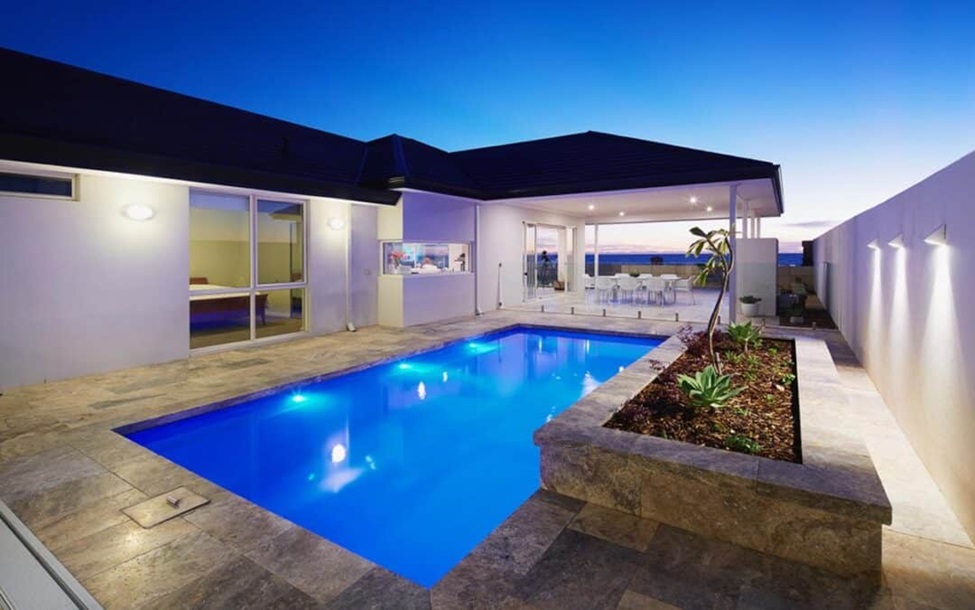
A swimming pool is not only a great design element that can increase the value of your house, but it also serves as a wonderful place to spend time with family and friends. To fully enjoy your pool at any time, day or night, selecting the right lighting is essential. Let’s explore the different types of pool lights and the benefits of making the right lighting decisions for your pool.

Evolution of Pool Lighting Technology

Over the years, lighting technology has evolved to offer a variety of options for swimming pools. There are typically two types of lighting for pools, each with its own considerations for energy efficiency and cost.

  1. Incandescent Lights: These traditional bulbs have been used for decades but are known to be energy-intensive and have a short lifespan, leading to higher energy bills and waste.
  2. Halogen Lights: While more energy-efficient and durable than incandescent bulbs, halogen lights are twice as expensive as fluorescent bulbs and still require regular replacement, making them less desirable for pool lighting.
  3. LED Lights: The advent of light-emitting diode (LED) lighting has revolutionized the world of pool lighting. LED lights have a long lifespan, are energy-efficient, and produce the same amount of light as traditional bulbs while using significantly less energy. They also remain cool to the touch and are environmentally friendly.

Benefits of LED Pool Lighting

LED lights offer several advantages for pool lighting:

  • Energy Efficiency: LED lights use less energy and have a longer lifespan compared to traditional bulbs, resulting in cost savings and reduced maintenance.
  • Environmental Friendliness: LED lights do not contain mercury and are clean and cold-tolerant, making them a sustainable choice for pool lighting.
  • Versatility: LED lights are available with energy-saving features such as sensors and dimmers, making them suitable for both indoor and outdoor lighting.
  • Longevity: With an average lifespan of 50,000 hours, LED lights require less maintenance and provide consistent illumination for an extended period.

By understanding the benefits of LED pool lighting and making the right lighting decisions, you can enhance the aesthetics, functionality, and energy efficiency of your pool, ensuring that it remains a delightful and inviting space for relaxation and entertainment.

For more information on pool lighting or any other questions related to this topic, feel free to reach out to us. We are here to assist you in making informed decisions about your pool lighting needs.

This post was written by a professional at Clear Tech Pools. Clear Tech Pools is expert in

 Pool Cleaning Service Largo FL. Our company was founded by local residents on the principles of hard work, exceptional customer service and a focused attitude. It is these qualities, along with our outstanding performance that keep our customers satisfied. We have built, renovated and serviced thousands of pools in the area, and we have a long list of references available for all of our services upon request. Our staff of professional technicians have extensive training for fast and efficient service. We maintain our excellent reputation for quality by maintaining friendly relationships with our customers.

On a hot summer day, the smell of pool water can bring back happy memories of carefree swimming. However, the smell often associated with swimming pools is not actually chlorine, but chloramines. In this blog, we will explore the chemistry behind pool smells, how chloramines form, and ways to manage chlorine levels for a safe and enjoyable swimming experience.

What Causes Pool Smells?

When chlorine disinfectants are added to pool water, they release hypochlorous acids and hypochlorite, collectively known as “free-available chlorine” (FAC). These chlorine compounds are crucial for destroying germs in the water and protecting swimmers. However, when FAC reacts with sweat, oils, and urine from swimmers, it forms chloramines.

Chloramines are formed through the reaction of hypochlorous acids and ammonia, which is present in sweat and urine. This reaction occurs when chloride ions replace hydrogen ions within ammonia, resulting in the formation of monochloramines, dichloramines, and trichloramines. While monochloramine is a disinfectant that can be added to water, dichloramines and trichloramines are undesirable and can cause irritation to the skin, eyes, and respiratory system.

Managing Chlorine Levels

The challenge for pool managers is to maintain an adequate level of available free chlorine to effectively destroy germs. As chloramines form, the amount of free chlorine available for disinfection decreases. Combination available chlorine (CAC) refers to the free chlorine that has been locked up in chloramines and cannot be released. To achieve optimal disinfection, CAC levels must be kept low.

Florida Pool Patio recommends maintaining FAC concentrations between 1.0 and 4.0 parts per million (ppm) for effective chlorine levels. FAC levels should never drop below 1 ppm, and CAC levels should not exceed 0.2 ppm. Pool managers can use test kits to measure FAC and total chlorine (TC) levels.

Reducing Pool Smells

A strong chlorine odor in the swimming pool is often associated with too much chlorine. Paradoxically, a strong smell may indicate that there is not enough chlorine in the pool. To eliminate chloramines, pool operators can use shock treatment or superchlorination. This involves adding extra chlorine to the pool to destroy ammonia, organic compounds, and other substances that contribute to chloramine formation. The FAC level in the pool should be ten times greater than the CAC for effective chloramine destruction.

Pool Safety

Proper disinfection of pool water is essential for the health and safety of swimmers. Pool managers are responsible for adjusting water chemistry to reduce the risk of infection. Swimmers can also check for several indicators to determine if a pool is safe:

  1. Clear and Blue Water: The water in the pool should be clear and blue, allowing visibility of drains or painted stripes on the pool floor. Cloudy or colored water may indicate the presence of algae, making it unsafe to swim.
  2. Slimy Pool Walls: If the pool walls feel slimy, germs may be present on the surface. Swimmers should avoid swimming in pools with dirty walls to prevent infection.
  3. Chemical Odor: A strong chemical odor around the pool should be a concern. Pools with a strong chemical smell should be avoided until the water is properly treated.

It is important to shower before entering the swimming pool to maintain a clean environment. Showering helps remove substances like sweat and oil that can contribute to chloramine formation. Additionally, encouraging children to take regular bathroom breaks can help prevent accidents in the pool.

Remember, a well-managed pool should not have a strong odor. By understanding the chemistry behind pool smells and effectively managing chlorine levels, pool managers can provide a safe and enjoyable swimming experience for everyone.

Florida Pool Patio is a second-generation company that comprises of engineering professionals with a top-notch team. Our team has built a reputation for providing a positive experience and satisfied clientele with the latest technology. Our luxury pool builders in Golden Beach FL will not settle merely building pools and patios; we want to positively impact the environment and benefit our clients from our knowledge. From construction to maintenance to outstanding customer service, we will never settle for less than the best.